
MTG Booster Expected Value Guide: Is It Worth Buying Packs?
Every Magic: The Gathering player faces the same question at some point: "Should I buy packs or just buy the singles I need?" The answer lies in understanding Expected Value (EV) — the mathematical average of what you'll get from opening a booster pack. EV won't tell you what's inside a specific pack, but it will tell you whether buying packs is a good deal on average. This guide explains everything you need to know to make informed purchasing decisions.
What Is Expected Value (EV)?
Expected Value is the average monetary value of all the cards you'd get if you opened an infinite number of packs from a given set. It's calculated by multiplying each card's market price by its probability of appearing in a pack, then summing all those values together.
Simple example: Imagine a set has only two rares — one worth $20 (appears in 50% of packs) and one worth $0.50 (appears in 50% of packs). The EV of the rare slot alone would be: ($20 × 0.5) + ($0.50 × 0.5) = $10.25. A real booster has dozens of possible rares and mythics, plus value from uncommons and commons, but the math works the same way.
If the EV of a pack is higher than the retail price, you're getting a good deal on average. If it's lower, you're paying a premium for the experience of opening packs.
Understanding the Three Booster Types
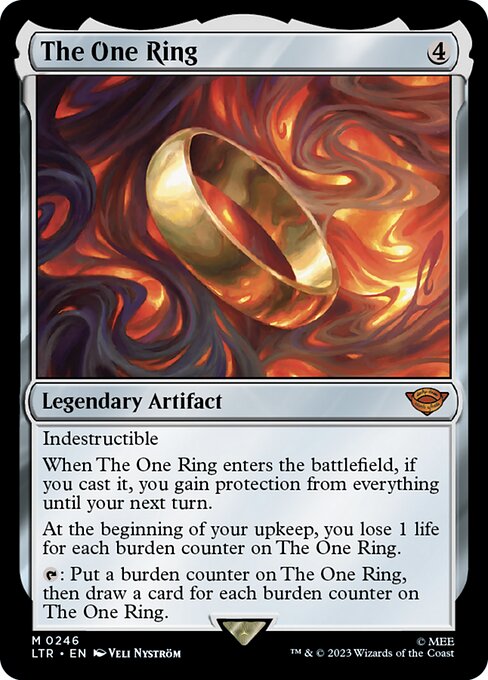
Since 2024, Magic uses three main booster products. Each has different contents, prices, and EV profiles:
Play Boosters ($5–7 per pack)
The standard pack, designed for Draft and Sealed. Contains 14 cards: 6 commons, 3 uncommons, 1 guaranteed rare or mythic, 2 "wildcard" slots (any rarity), 1 land, and 1 potential List card. Thanks to the wildcard slots, you have a 37% chance of opening two rares and a 4% chance of three. This makes Play Boosters surprisingly good for value. They're the best balance of price-to-EV for most players.
Collector Boosters ($20–30 per pack)
The premium product with 15 cards, including multiple foils, extended art, borderless, and showcase treatments. These have the highest EV per pack but also the highest price. Best for collectors chasing premium versions of cards. The gap between EV and price is often smallest here, but the variance is extreme — one pack might contain a $100 borderless mythic, the next might have $8 worth of foils.
Set Boosters (Being Phased Out)
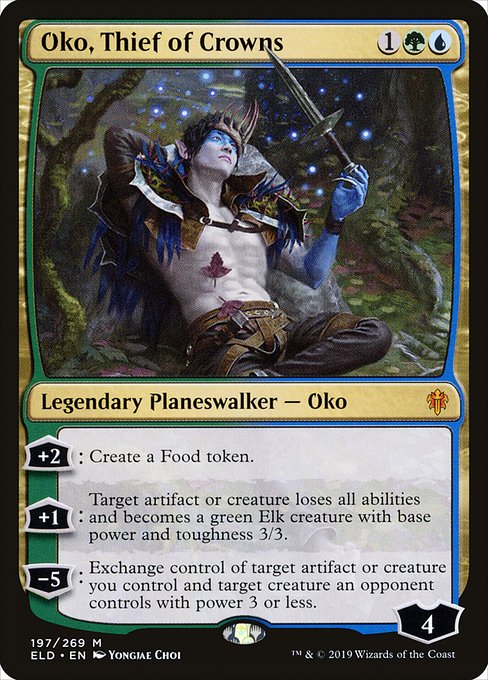
Set Boosters contained 12 cards with more guaranteed rares and showcase art cards. Wizards merged their features into Play Boosters starting with Murders at Karlov Manor (2024). Some older sets still have Set Boosters available, and their EV can be excellent since supply is no longer increasing.
The Variance Problem
Here's the critical truth about EV: it's an average, not a guarantee. A set might have a Play Booster EV of $6.50, which sounds great against a $5.99 retail price. But in practice:
- Most packs will contain a bulk rare worth $0.25–$1.00
- One in every ~8 packs will have a mythic rare
- The expensive chase mythic might appear once every 30+ packs
- A few high-value hits are doing the heavy lifting for the entire average
This means you might open 10 packs and get $15 worth of cards, or you might get $80. Variance is highest in sets where EV is concentrated in a few expensive cards (like a set with one $50 mythic and everything else under $2). It's lowest in sets with many moderately-priced rares across the board.
When IS It Worth Buying Packs?
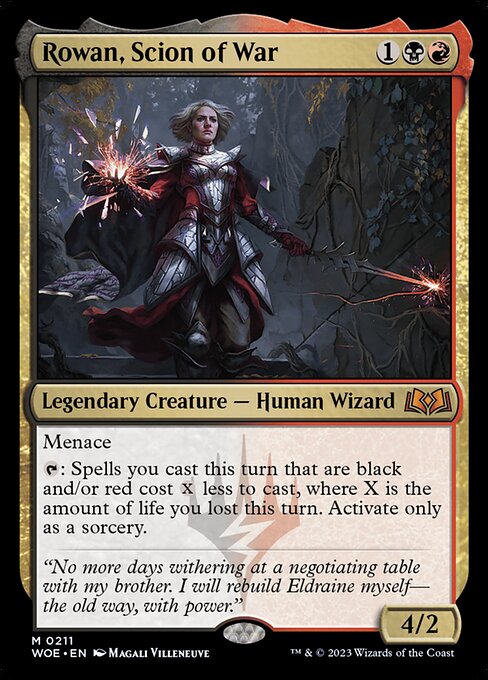
Despite the variance, there are scenarios where buying sealed product makes financial sense:
- Release weekend: Card prices are highest before supply floods the market. If you can open and sell immediately, EV is at its peak. Prices often drop 30–50% in the first two weeks.
- Sets loaded with format staples: Sets like Modern Horizons 2 and Modern Horizons 3 contain cards playable in Modern, Legacy, and Commander. These cards hold value because demand spans multiple formats.
- Collector Boosters with premium chase cards: When a set has highly desirable borderless or showcase treatments, Collector Booster EV can exceed the pack price.
- You're drafting anyway: If you're playing Draft, you're getting entertainment value plus the cards. The EV is a bonus on top of the gameplay experience.
When It's NOT Worth Buying Packs
- You need specific cards: If you want 4 copies of a $10 rare, buying $40 in singles is far better than opening $200 in packs hoping to find them.
- Old sets with deflated prices: As supply accumulates, EV drops below retail. Sets that have been open for months rarely offer positive EV.
- High-variance sets: When one mythic is $50 and everything else is bulk, you're essentially playing the lottery. The EV might look good, but your actual experience will usually be disappointing.
- Crossover/IP sets with overprinting risk: Licensed sets (Marvel, Final Fantasy, etc.) can see prices crash if production runs are larger than anticipated.
Box EV vs. Individual Pack EV
A Play Booster box contains 36 packs. Buying a box reduces variance because you're guaranteed a distribution closer to the statistical average. With 36 packs, you'll open roughly 4–5 mythic rares and 40+ rares. Individual packs are high-variance gambles; boxes smooth that out.
Boxes also typically cost less per pack than buying individually ($100–110 for 36 Play Boosters ≈ $2.80–$3.05/pack vs. $5.99 retail). This lower cost basis means boxes achieve positive EV more often than individual packs.
How Card Prices Move Over Time
Understanding price cycles is essential for EV analysis:
- Preorder/spoiler season: Prices are inflated by hype. Most cards are overvalued.
- Release weekend (Day 1–3): Prices peak. Supply hasn't caught up with demand yet. Best time to sell opened cards.
- Weeks 1–4: Prices crash as supply floods the market. EV drops rapidly.
- Months 2–6: Prices stabilize at their "true" level based on actual play demand.
- Long-term (6+ months): Staples slowly appreciate. Bulk continues to drop. Commander-playable mythics hold value best.
The takeaway: if you're opening packs for value, do it early. If you're buying singles, wait 3–4 weeks after release for prices to settle.
Make Smarter Decisions with Data
Instead of guessing whether packs are worth buying, use our Booster Fair Prices tool to check the real-time EV for every set. We calculate fair prices for Play, Set, and Collector Boosters based on current market data from TCGPlayer and Cardmarket, updated weekly.
For each set, you can see:
- Current fair price per booster type
- Price history charts showing EV trends over time
- The most valuable cards driving each booster's EV
Compare the fair price against the retail price to instantly see whether a pack is a good deal. You can also try opening packs risk-free with our Booster Simulator — experience the thrill without spending a cent.
The Bottom Line
Opening packs is fun — there's nothing quite like pulling a chase mythic. But if you're treating it as a financial decision, EV gives you the data to decide wisely. Remember these rules:
- Need specific cards? Buy singles. Always.
- Want to draft? Buy packs. The gameplay is worth it on its own.
- Want to crack packs for value? Check the EV first, buy boxes instead of individual packs, and open new sets early.
- Collector pieces? Collector Boosters have the best premium card odds, but check the EV — not all sets are equal.
Check our Booster Fair Prices page before your next purchase. The numbers don't lie.